Project-based learning helps MEP (Mechanical, Electrical, and Plumbing) engineers move beyond theory and apply concepts in real design situations. Instead of just studying systems, you work on actual building projects where you design HVAC layouts, electrical circuits, and plumbing systems. This practical exposure builds strong technical confidence and industry understanding.
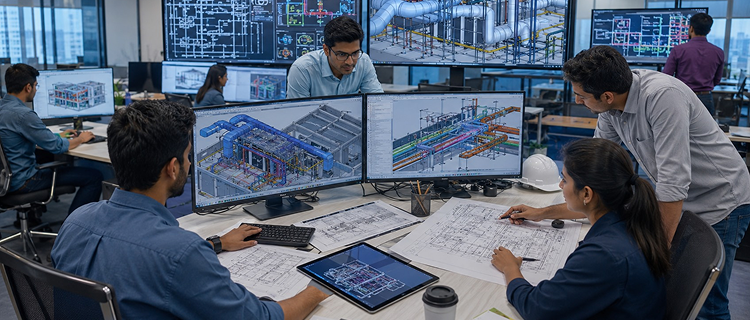
In MEP engineering, software skills are essential. Through project-based learning, you get hands-on experience with industry tools like Revit MEP, AutoCAD, and BIM platforms. Working on complete projects helps you understand how these tools are used in real workflows, making you job-ready from day one.
MEP systems are always connected with architectural and structural designs. Project-based learning teaches you how coordination works between different departments. You learn how to avoid clashes, manage system integration, and work in a BIM environment where all disciplines come together in one model.
Every project comes with real challenges such as space limitations, system clashes, and design adjustments. By working on projects, you learn how to identify problems and find practical engineering solutions. This strengthens your decision-making ability, which is highly valued in the construction industry.
One of the biggest advantages of project-based learning is portfolio development. Every completed project becomes proof of your skills. Your portfolio may include HVAC layouts, electrical designs, plumbing systems, BIM models, and coordination drawings. This helps employers clearly see your capabilities during interviews.
A strong portfolio makes a big difference when applying for jobs. Employers prefer candidates who can show real project experience rather than just certificates. With project-based learning, you demonstrate practical knowledge, software skills, and industry readiness, which increases your chances of getting hired in top MEP companies.
At CADD International, our project-based MEP training programs are designed to help students build real-world skills and develop strong portfolios that meet industry expectations and global construction standards.

Call Now